
Empty Nest Syndrome: Finding Your Footing After Your Child Leaves Home
Articles
Sep 13, 2026
School morning anxiety making it hard to leave home? Learn how to support your child, work with their school, and recognize when therapy may help.
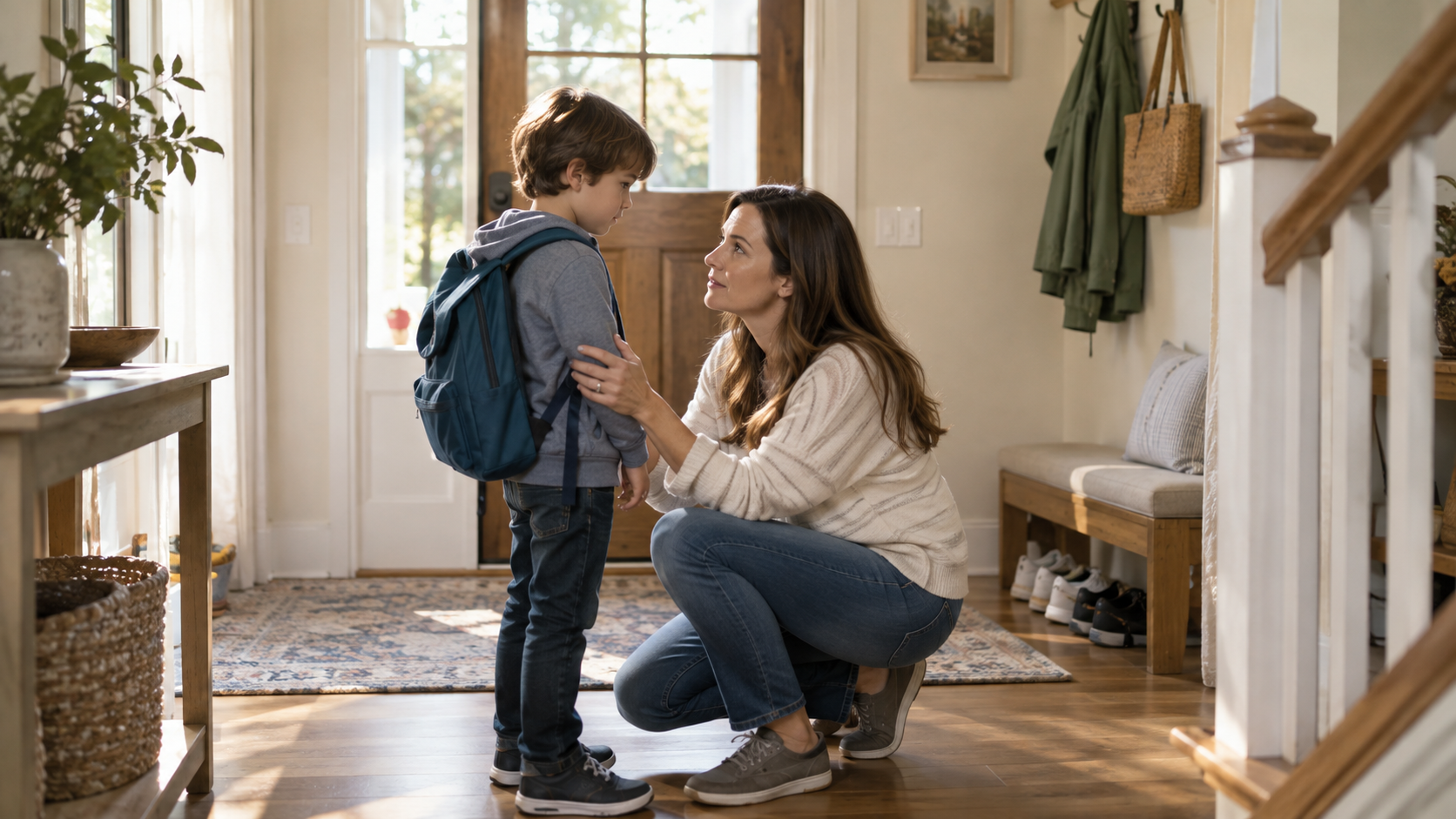
The backpack is packed. Breakfast is on the table. Then your child says their stomach hurts, starts crying, or refuses to get dressed. You have to leave for work, the bus is coming, and you are trying to figure out whether they need reassurance, medical attention, or a different kind of support.
Back-to-school advice often focuses on getting ready for the first day. But some families need help with what happens afterward, when getting out the door becomes the hardest part of the day.
Understanding the difficulty starts with curiosity. What feels unmanageable to your child, and what would help them take the next step? The following approach can help you respond to anxious mornings while recognizing when to involve the school or a professional.
School morning anxiety can involve worry about separation, friendships, academic demands, or something specific happening at school. The approaching departure may bring those worries into focus. Some children can explain what feels frightening; others communicate distress through tears, physical discomfort, silence, or resistance.
A child worried about reading aloud may say, “I hate school.” Another may repeatedly ask when you will pick them up. Ask about particular moments in the day instead of expecting your child to explain everything at once.
The Child Mind Institute’s guidance on back-to-school anxiety recommends listening to children’s concerns and planning support around the situations that trouble them. For a broader overview, explore our guide to back-to-school anxiety signs and coping strategies.
When your child is upset, try one clear acknowledgment followed by one manageable action:
“Getting started feels really hard today. I’m here. Let’s sit together for a moment, then put your shoes on.”
You do not need a perfect speech. Aim for language your child can understand in that moment. If they reject your first suggestion, pause before adding more instructions.
Avoid promises you cannot keep, such as guaranteeing that everyone will be friendly or that nothing difficult will happen. Instead, help your child identify what they can do if a problem arises. This combines validation with realistic confidence, an approach described in the Child Mind Institute’s advice for parenting anxious children.
Anxiety can accompany genuine stomachaches, headaches, nausea, or dizziness. A child who feels better after staying home is not necessarily pretending. However, the timing of symptoms cannot establish their cause.
Contact your child’s pediatrician about recurring, new, severe, or concerning symptoms, and follow medical advice and school illness policies. The American Academy of Pediatrics recommends medical evaluation when physical complaints accompany school avoidance.
Introduce coping tools during a calm moment so your child has a chance to become familiar with them. You might practice gentle, slow breathing, relaxing tense shoulders, or using a short reminder such as, “I can ask for help.” These are among the approaches discussed in the American Academy of Pediatrics’ childhood anxiety guidance.
Offer a choice: “Would you like to breathe with me or use your reminder?” Keep it simple. Treat the exercise as support your child can try, without making feeling calm another task they must complete before leaving.
Choose one or two changes your household can realistically maintain. A complicated new routine may be difficult to follow when everyone is tired.
Before bed, try:
Keep sleep and waking times consistent, and use a familiar wind-down routine. The American Academy of Pediatrics’ back-to-school tips emphasize sleep routines and advance preparation during the school transition.
Adapt the plan to your child. A younger child might prefer a picture checklist. An older child could help decide which reminders are useful and which feel intrusive. Ask, “What is one thing we could set up tonight to make tomorrow easier?”
Save the longer conversation for a time when neither of you is watching the clock. You might ask:
“If we could make one part of tomorrow easier, which part would you choose?”
If your child says “everything,” gently narrow the question: “Is it hardest before you get there, when you walk in, or later in the day?”
Listen for practical details. “Lunch is awful” might lead to a conversation about seating, noise, friendships, or having enough time to eat. You do not need to decide immediately what the answer means. Start by understanding the experience.
If your child describes bullying, threats, or mistreatment, take the concern seriously and work with the school on safety and accountability. Coping exercises alone cannot address an unsafe situation. The American Academy of Pediatrics’ school avoidance guidance specifically identifies peer problems and threats as issues that may require parent advocacy and school changes.
Let the teacher or school counselor know what mornings look like at home. A concrete description gives them something to work with: “She cries when we reach the entrance and says she cannot walk to class alone.”
Ask whether a familiar staff member can meet your child, whether a classmate can walk in with them, or whether a predictable first activity could help with arrival. Planned handoffs are one strategy discussed in the Child Mind Institute’s back-to-school guidance.
Agree on who will communicate with you and when you will review the plan. Ask what happens after you leave, too. Does your child settle and participate, or remain distressed? Both the morning experience and the rest of the school day matter.
Repeated lateness, missed classes, frequent early pickups, or intense distress around attendance warrant attention. A child can be struggling significantly even when they make it into the building.
“School refusal” describes a pattern of difficulty attending or staying at school; it is not a diagnosis by itself. Assessment can help identify what is contributing. Treatment may include cognitive behavioral therapy and supported, gradual practice facing school situations. The Child Mind Institute explains these assessment and treatment approaches.
Avoid leaving your family to improvise a new attendance decision every morning. Work with the school, pediatrician, and a qualified therapist on an individualized plan that addresses health, safety, and participation.
You can seek help before the situation becomes severe. The National Institute of Mental Health recommends evaluation when emotional or behavioral difficulties cause distress or interfere with life at school, home, or with friends.
That information can help you and the school focus support on the transition. It does not erase how difficult the morning felt. Ask what helps your child settle, and consider whether that support can begin at arrival.
There is no need to wait for a particular number of missed days. Reach out when distress is persistent, escalating, or disrupting everyday life. An initial conversation can help you decide what level of support makes sense.
Yes. Depending on your child’s needs and treatment approach, therapy may include parent participation, skills to practice between sessions, and guidance for working with the school. The National Institute of Mental Health describes these elements of children’s mental health care.
You do not have to solve every difficult morning on your own. Elite Therapeutic Services offers child and adolescent therapy and support for anxiety, with virtual therapy serving clients in New York and Connecticut.
If school mornings are becoming a recurring source of distress, contact Elite Therapeutic Services to discuss your child’s age, needs, and location and explore an appropriate therapist match. The first step can be a conversation about what your family is experiencing and what support could help.